

Artificial intelligence (AI) is changing how businesses attract customers, create content, run advertising campaigns, and measure marketing performance. Tasks that once required hours of manual work can now be completed more efficiently with AI-powered tools.
But AI is not just about saving time. It can help businesses understand customer needs, improve marketing decisions, personalize experiences, and discover new opportunities for growth.
In 2026, businesses do not need to replace their entire marketing strategy with AI. The real opportunity is to combine smart technology with human creativity, experience, and a clear understanding of customers.
Whether you run a small business, manage an online store, or work as a digital marketer, here are 10 practical ways to use AI in digital marketing to grow your business.
How Is AI Transforming Digital Marketing in 2026?
AI is making digital marketing more data-driven, personalized, and efficient. Marketers can use AI to analyze customer behavior, discover content opportunities, automate repetitive tasks, and improve campaign performance.
For example, an online store can recommend products based on customer interests, while a service-based business can use AI to identify common customer questions and develop helpful website content.
AI is also changing how people discover information online. Search engines and AI-powered assistants increasingly provide direct answers and summaries, giving businesses new reasons to create clear, reliable, and useful content.
However, AI does not guarantee higher rankings, more traffic, or increased sales. Results depend on the quality of your strategy, your understanding of customers, and how effectively you apply the technology.
10 Ways Businesses Can Use AI in Digital Marketing to Grow in 2026
1. Create High-Quality Content Faster
Content marketing remains an effective way to educate customers, build trust, and attract website visitors. AI can help marketers generate blog ideas, prepare outlines, improve headlines, draft social media captions, and repurpose existing content.
For example, a marketing agency can use AI to plan a month’s worth of content around questions its target audience frequently asks.
If you want to explore practical applications, read our guide on how to use ChatGPT for digital marketing. It covers 20 useful ways marketers can apply ChatGPT to content creation, SEO, email campaigns, advertising, and more.
However, businesses should not publish unedited AI-generated content simply to increase output. Add original examples, useful insights, reliable sources, and human judgment to make every article valuable.
Growth opportunity: Produce useful content more efficiently without losing originality or your brand’s personality.
2. Personalize Customer Experiences
Customers respond better when marketing messages reflect their needs and interests. AI can help businesses analyze customer behavior and deliver relevant product recommendations, email campaigns, and website experiences.
For instance, an online clothing store could recommend products based on previous purchases or browsing activity, provided the appropriate permissions and privacy safeguards are in place.
Personalization should make the customer experience easier, not uncomfortable. Businesses must handle customer information responsibly and follow applicable data protection rules.
Growth opportunity: Deliver more relevant messages instead of sending the same offer to every customer.
3. Improve SEO and AI Search Visibility
AI can support keyword research, competitor analysis, content planning, and website optimization. It can help identify search questions, organize topics, and highlight missing information in existing articles.
However, modern SEO is not just about inserting keywords into content. Businesses should answer genuine questions, demonstrate expertise, keep information accurate, and make their websites easy to navigate.
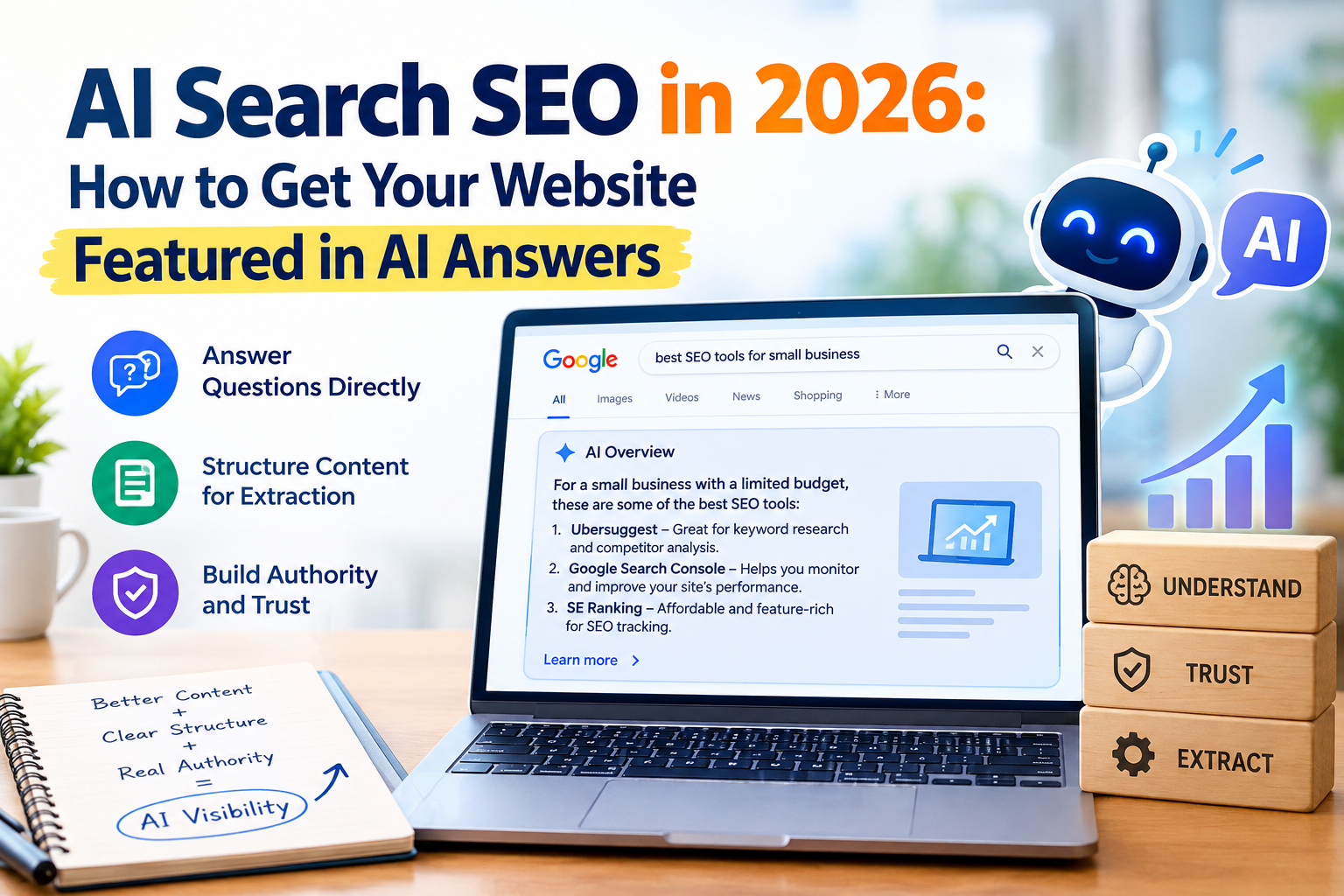
To learn more, read our guide on AI Search SEO in 2026: How to Get Your Website Featured in AI Answers.
You can also explore GEO vs. SEO: What’s the Difference and Why Does GEO Matter in 2026? to understand how traditional search optimization relates to visibility in AI-generated answers.
Growth opportunity: Build useful, well-structured content that serves people using traditional search engines and AI-powered search experiences.
4. Run Smarter Advertising Campaigns
AI-powered advertising features can help marketers test different headlines, optimize bids, identify audience patterns, and improve campaign delivery.
Platforms such as Google Ads and Meta Ads offer automation features that can support these activities. Generative AI can also help create alternative ad copy and creative concepts.
For example, a fitness business could test different messages promoting personal training, flexible timings, and beginner-friendly programs to understand which attracts more qualified leads.
Automation still needs human oversight. Poor conversion tracking, unclear goals, or weak offers can waste advertising budgets.
Growth opportunity: Use AI-assisted optimization while measuring qualified leads, conversion rates, and return on advertising spend.
5. Improve Customer Support With AI Chatbots
AI chatbots can answer common questions, explain services, guide visitors through product options, and provide information outside regular business hours.
A local service business, for example, could use a chatbot to explain service availability, appointment procedures, and pricing information.
However, customers should know when they are interacting with AI. Complex complaints, sensitive questions, and situations requiring personal judgment should be transferred to a human representative.
Growth opportunity: Reduce response delays and help potential customers find the information they need.
6. Make Email Marketing More Effective
AI can help marketers draft email campaigns, suggest subject lines, segment audiences, and test different messages.
Instead of sending every subscriber the same email, a business can create different campaigns for new subscribers, existing customers, and people interested in particular products.
For example, an online learning platform could send beginners a course introduction while offering advanced learning resources to experienced users.
The objective is not to send more emails. It is to send messages that are genuinely relevant to each audience.
Growth opportunity: Improve engagement through better targeting, valuable content, and thoughtful automation.
7. Turn Marketing Data Into Better Decisions
Businesses collect data from website traffic, advertising, email campaigns, social media, and sales. AI can help summarize this information and identify patterns that deserve further investigation.
Imagine a business receiving thousands of website visits but very few enquiries. AI-assisted analysis might help the marketing team investigate whether the landing page, offer, or contact form is creating problems.
These findings are starting points, not automatic proof of the cause. Marketers must verify insights against reliable data before making major changes.
Growth opportunity: Make marketing decisions based on measurable customer behavior rather than assumptions.
8. Create Engaging Images and Video Content
AI-powered creative tools can help develop image concepts, draft video scripts, generate subtitles, edit footage, and adapt content for different platforms.
A business can turn one detailed blog post into a short educational video, several social media graphics, and a newsletter.
Nevertheless, quality and authenticity matter. Review generated visuals carefully, check usage rights, and avoid misleading images or artificial endorsements that could confuse customers.
Growth opportunity: Create more marketing assets while maintaining consistent branding and quality.
9. Generate and Manage Better Leads
AI can help businesses organize enquiries, summarize customer conversations, prioritize follow-ups, and identify prospects who may be more likely to convert.
For example, a software company could organize leads by product interest, company size, and stage in the buying process. Its sales team can then focus on the most relevant opportunities.
AI-based lead scores are estimates, not guarantees. Businesses should review their results and ensure their systems do not unfairly exclude potential customers.
Growth opportunity: Improve follow-up processes and help sales teams focus on meaningful customer conversations.
10. Automate Repetitive Marketing Tasks
Marketing involves many recurring activities, including scheduling posts, preparing reports, organizing campaign data, and sending routine notifications.
AI tools and automation platforms can connect these tasks into workflows, reducing manual effort and allowing teams to spend more time on strategy and creative work.
For example, a business could automate a weekly marketing report that gathers campaign metrics and highlights important changes for review.
Not every task should be automated. Customer-facing messages, sensitive information, and important business decisions may require human approval.
Growth opportunity: Save time, reduce repetitive work, and build more consistent marketing processes.
What Are the Top 10 AI Tools for Digital Marketing in 2026?
The right tool depends on your goals, budget, and existing workflow. Here are 10 options worth evaluating.
- ChatGPT: Content ideas, copywriting, research support, and marketing planning.
- Google Gemini: Brainstorming, writing assistance, and information analysis.
- Jasper: Marketing copy and brand-focused content workflows.
- Semrush: SEO research, keyword analysis, and competitor insights.
- Surfer: Content planning and on-page SEO optimization.
- Canva: Social media graphics, presentations, and marketing visuals.
- HubSpot: CRM, marketing automation, and customer engagement.
- Grammarly: Grammar, clarity, and writing improvement.
- Google Ads: AI-assisted advertising and campaign optimization.
- Manychat: Automated conversations and messaging workflows.
These are practical options, not a fixed ranking. Features and pricing can change, and some advanced functions require paid plans.
Businesses should select tools based on their actual needs rather than subscribing to every available platform.
Core Areas Driving the AI Marketing Transformation
Four major areas are shaping AI adoption in digital marketing.
- Customer insights: Understanding audience behavior, interests, and purchasing patterns.
- Content and creativity: Developing ideas, improving messages, and adapting content for different platforms.
- Automation: Connecting repetitive tasks and improving workflow efficiency.
- Performance measurement: Analyzing results, identifying patterns, and finding opportunities for improvement.
These areas work together. Customer insights can guide content creation, that content can support an advertising campaign, and the campaign results can inform future decisions.
Key Trends Reshaping Marketing Workflows in 2026
AI-Assisted Search Optimization
Businesses are adapting their content strategies for both traditional search engines and AI-powered search experiences. Clear answers, reliable information, and original insights remain important.
Human-Led AI Content
AI helps speed up writing and research, but real examples, expertise, fact-checking, and a distinctive brand voice help content stand out.
Connected Marketing Systems
Businesses are bringing customer relationship management, email campaigns, advertising, and analytics closer together to reduce disconnected workflows.
Conversational Customer Journeys
AI chatbots and messaging tools can help customers move from asking questions to discovering suitable products, services, or support.
Responsible AI Use
Privacy, accuracy, transparency, and human oversight are becoming important considerations when businesses introduce AI into their marketing processes.
Not every business needs a complex AI system. Start with tools that solve a clear problem and expand only when the benefits justify the cost.
Three Practical Lessons for Businesses Using AI
Start With a Business Problem
Before buying an AI tool, identify what needs improvement. Is content production too slow? Are customer enquiries being missed? Are advertising costs difficult to control?
Choose a tool that addresses a specific challenge and test whether it makes a meaningful difference.
Give AI the Right Information
AI performs more usefully when you provide clear instructions, audience details, brand guidelines, and accurate information about your products or services.
Instead of simply asking for an advertisement, explain the target audience, customer problem, key benefit, offer, and desired action.
Better context generally produces more relevant results, although every output still needs review.
Measure Results, Not the Amount of Content Produced
Publishing 50 posts or generating hundreds of keywords does not automatically grow a business.
Track meaningful outcomes such as qualified leads, sales, conversion rates, customer retention, and time saved.
If a tool produces more content but does not improve the outcomes that matter, review the strategy before increasing its use.
For reliable guidance, businesses should refer to official documentation and established industry resources.
- Google Search Central: Generative AI Content Guidance — Guidance on using AI for content while maintaining quality and following search policies.
- Google Search Central: Helpful, Reliable, People-First Content — Advice on creating useful, original content that serves readers.
- Google Search Central: AI Features and Your Website — Guidance on how websites can appear in Google’s AI-powered search experiences.
- HubSpot: AI Marketing Tools — An overview of AI applications across marketing and customer engagement.
- Google Ads Help — Official guidance on advertising features, campaign management, and optimization.
These resources can help businesses make informed decisions rather than relying entirely on AI-generated recommendations.
Frequently Asked Questions About AI in Digital Marketing
1. How is AI used in digital marketing in 2026?
AI supports content creation, SEO research, advertising, email personalization, customer support, lead generation, and marketing analysis. Businesses use it to improve efficiency and make better-informed decisions.
2. What are the best AI tools for digital marketing in 2026?
Popular options include ChatGPT, Gemini, Jasper, Semrush, Canva, HubSpot, Grammarly, and AI-assisted advertising platforms. The best choice depends on your business goals and budget.
3. Can AI replace digital marketers?
AI can automate certain tasks, but it cannot fully replace human judgment, creativity, strategic planning, and customer relationships. The strongest approach combines AI assistance with human expertise.
4. Can AI-generated content rank on Google?
Yes. AI-assisted content can rank when it provides genuine value and meets Google’s quality requirements. Producing large amounts of low-quality content primarily to manipulate search rankings can violate Google’s spam policies.
5. How can small businesses use AI for marketing?
Small businesses can use AI to plan blog content, write social media drafts, improve email campaigns, answer common customer questions, and analyze marketing performance. Starting with one clear goal helps keep costs under control.
6. How does AI improve SEO?
AI can assist with keyword research, search-intent analysis, content planning, and identifying optimization opportunities. It cannot guarantee rankings, so businesses must still focus on helpful content, technical SEO, and accurate information.
Yes. AI can generate content ideas, draft captions, suggest creative concepts, and help analyze engagement. Human review is still important for brand consistency and meaningful conversations with followers.
8. Will AI reduce digital marketing costs?
AI can reduce manual work and improve efficiency, but tools, training, implementation, and quality checks also involve costs. Businesses should compare the total cost with measurable benefits.
9. What are the risks of using AI in digital marketing?
Risks include inaccurate information, repetitive content, privacy issues, biased recommendations, and copyright concerns. Businesses should establish clear guidelines and review AI-generated content before using it.
10. How can a business start using AI in digital marketing?
Begin with one specific challenge, choose a suitable tool, test it on a small scale, and measure the results. Expand gradually when the benefits are clear.
Final Thoughts
AI in digital marketing offers businesses new ways to create content, understand customers, improve advertising, and build efficient workflows in 2026. However, using more AI does not automatically lead to better results.
The businesses most likely to benefit are those that combine technology with original thinking, reliable information, and a genuine understanding of their customers.
Start small, choose tools that solve real problems, and measure what improves.
The goal is not to let AI do all your marketing. It is to use AI to make your marketing more useful, efficient, and effective.





Leave a Reply