
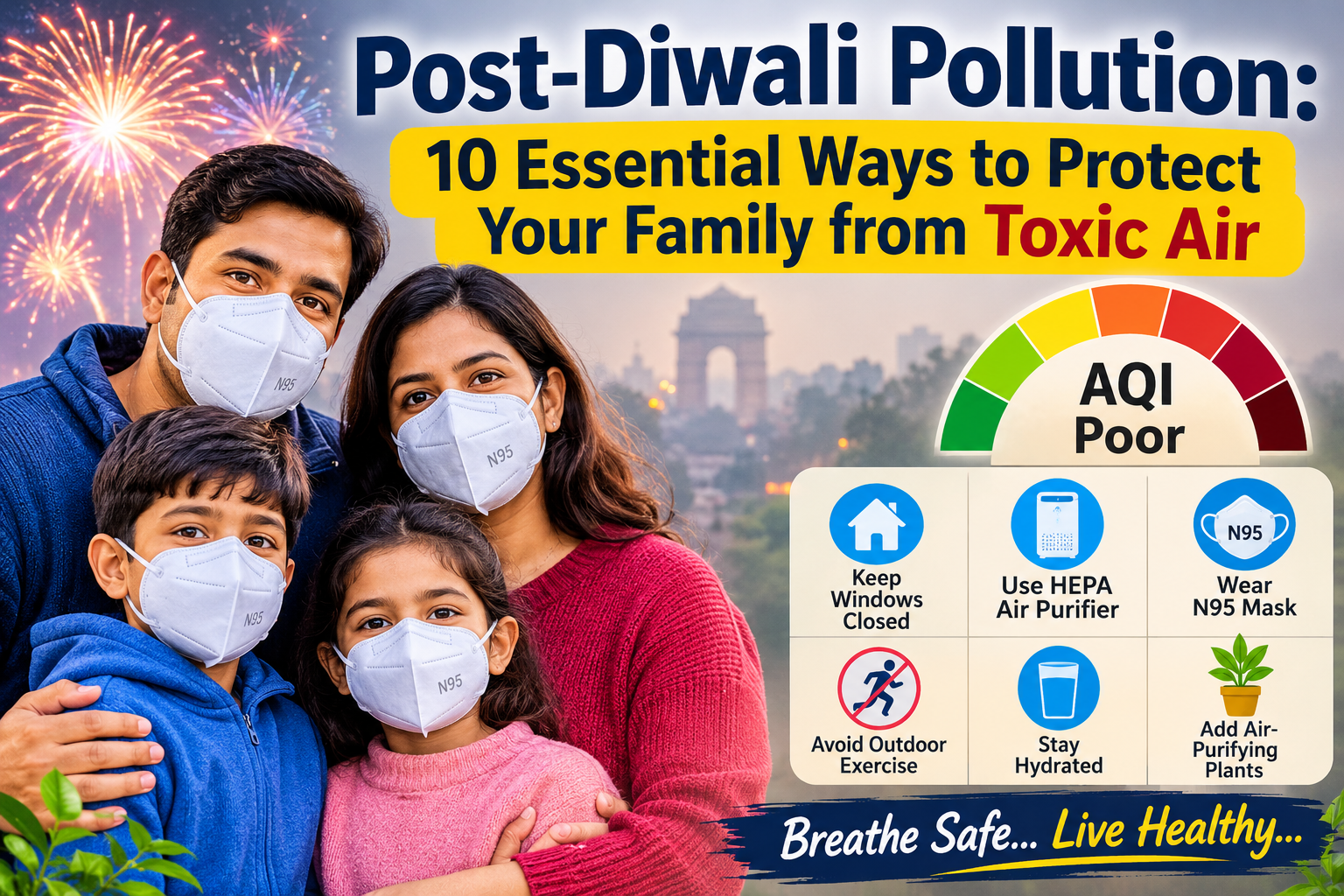
Diwali is a festival of happiness, lights, sweets, and togetherness. But once the celebrations end, many Indian cities face another challenge: rising air pollution. Firecracker emissions, vehicle exhaust, construction dust, and unfavourable weather conditions can combine to create unhealthy air that affects everyday life.
The biggest concern is the presence of fine particulate matter (PM2.5), which can travel deep into the lungs and potentially affect respiratory and cardiovascular health.
Children, senior citizens, pregnant women, and people with asthma or existing heart and lung conditions are particularly vulnerable.
While completely avoiding outdoor pollution is difficult, adopting a few preventive measures can help reduce your family’s exposure.
In this guide, we explore 10 practical ways to protect your family from post-Diwali pollution, improve indoor air quality, and recognise important respiratory warning signs.
Quick Takeaway: How to Protect Your Family from Post-Diwali Pollution
Post-Diwali pollution can expose families to harmful particulate matter and other pollutants. Follow these essential precautions:
- Monitor your city’s Air Quality Index (AQI) daily.
- Keep windows and doors closed during periods of high outdoor pollution.
- Use a properly sized HEPA air purifier to improve indoor air quality.
- Wear a well-fitted N95 respirator when outdoor exposure is unavoidable.
- Avoid outdoor exercise and children’s outdoor play when air quality is unhealthy.
- Reduce indoor pollution by avoiding incense, mosquito coils, and smoking.
- Maintain personal hygiene after returning home.
- Drink sufficient water and follow prescribed respiratory treatments.
- Give extra attention to children and senior citizens.
- Seek medical assistance for severe breathing difficulties or chest pain.
Key takeaway: Monitoring AQI, reducing outdoor exposure, improving indoor filtration, and recognising health warning signs are among the most practical ways to protect your family after Diwali.
Why Does Air Pollution Increase After Diwali?
Post-Diwali air pollution is influenced by multiple environmental factors. Firecrackers release particulate matter and gaseous pollutants, while vehicle emissions, industrial activities, and construction dust add to the existing pollution burden.
Weather conditions can make the situation worse. Low wind speeds and temperature inversions may prevent pollutants from dispersing, resulting in higher pollution concentrations.
Two important pollutants to understand are:
- PM2.5: Fine particles measuring 2.5 micrometres or smaller that can penetrate deep into the respiratory system.
- PM10: Inhalable particles measuring 10 micrometres or smaller that can enter the respiratory tract.
According to the World Health Organization (WHO), exposure to particulate air pollution is associated with respiratory and cardiovascular health problems.
10 Essential Ways to Protect Your Family from Toxic Air
1. Monitor the Air Quality Index (AQI)
Before planning outdoor activities, check your city’s Air Quality Index.
India’s AQI is divided into six categories:
- 0–50: Good
- 51–100: Satisfactory
- 101–200: Moderate
- 201–300: Poor
- 301–400: Very Poor
- 401–500: Severe
Use the CPCB National Air Quality Index dashboard to check pollution levels.
When AQI reaches poor or worse categories, reduce outdoor exposure, particularly for children, older adults, and people with respiratory conditions.
Expert tip: Check AQI before school drop-offs, morning walks, and outdoor activities. Do not judge air quality only by how clear the sky looks.
2. Seal Windows and Doors During Peak Hours
Keeping windows open during periods of heavy pollution can allow harmful particles to enter your home.
Close windows and doors when outdoor air quality is poor. Weather stripping and door seals can help reduce unwanted air leakage.
If your air-conditioning system has a recirculation setting, consider using it instead of drawing in heavily polluted outdoor air.
However, remember to ventilate when outdoor air quality improves and avoid allowing indoor pollutants to accumulate.
3. Invest in a HEPA Air Purifier
A HEPA air purifier can help remove fine airborne particles, including PM2.5, from indoor environments.
When selecting an air purifier, consider:
- Genuine HEPA filtration.
- Suitable room coverage and CADR.
- Filter replacement availability.
- Maintenance requirements.
- Noise levels and operating costs.
Place the purifier in frequently occupied rooms, particularly bedrooms and living areas.
According to the US Environmental Protection Agency (EPA), selecting an appropriately sized air cleaner is important for effective indoor particle removal.
Avoid ozone-generating air-cleaning devices.
4. Wear N95 Particulate Respirators Outdoors
Going outside may sometimes be unavoidable, whether for work, school, or essential shopping.
A properly fitted N95 respirator can help reduce exposure to airborne particulate matter.
Ensure that:
- It covers your nose and mouth.
- It fits closely against your face.
- There are no significant gaps around the edges.
- It is replaced according to the manufacturer’s instructions.
Ordinary cloth masks and loose-fitting surgical masks should not be considered reliable protection against PM2.5.
5. Reschedule Outdoor Exercise and Play
Walking, jogging, cycling, and playing outdoors are healthy activities. However, exercising in heavily polluted air can increase the amount of pollution entering your lungs.
During high-pollution periods:
- Move workouts indoors.
- Avoid jogging near busy roads.
- Encourage children to play indoors.
- Postpone outdoor sports.
- Choose indoor yoga or gentle exercises.
Once air quality improves, outdoor activities can gradually return to your family’s routine.
6. Introduce Indoor Air-Purifying Plants
Plants such as spider plants, areca palms, and money plants can make indoor spaces more attractive and pleasant.
However, ordinary household plants cannot replace HEPA air purifiers or effectively protect your family from dangerous PM2.5 exposure.
Enjoy plants for their decorative and psychological benefits, but do not depend on them as your primary air-cleaning solution.
7. Avoid Secondary Indoor Pollutants
Outdoor pollution is not the only concern. Everyday household activities can also release harmful particles and pollutants.
During periods of poor outdoor air quality, avoid unnecessary sources of indoor pollution.
- Avoid burning incense sticks and dhoop.
- Do not smoke indoors.
- Minimise mosquito coil and candle use.
- Avoid unnecessary aerosol sprays.
- Reduce cooking smoke and excessive frying.
- Use kitchen exhaust systems when outdoor conditions allow safe ventilation.
The EPA’s indoor air quality recommendations provide additional guidance on controlling indoor pollution sources.
8. Focus on Hydration and Respiratory Care
Drinking sufficient water supports normal bodily functions and helps prevent dehydration. A balanced diet containing fruits, vegetables, and nutritious foods also supports overall health.
Some useful everyday habits include:
- Drink water regularly.
- Include seasonal fruits and vegetables.
- Follow prescribed medication schedules.
- Keep doctor-recommended inhalers accessible.
- Avoid self-medicating for persistent respiratory symptoms.
For additional nutritional inspiration, explore our article on Festive Eating Without Guilt: Smart Ways to Enjoy Sweets.
Remember that food and hydration cannot detoxify your lungs or reverse the effects of polluted air.
9. Maintain Personal Hygiene After Coming Indoors
Outdoor pollution particles can settle on clothing, hair, footwear, and exposed skin.
After spending considerable time outside:
- Remove your footwear before entering the house.
- Change outdoor clothes.
- Wash your hands and face.
- Wash your hair when necessary.
- Clean frequently touched surfaces.
- Use damp mopping instead of dry sweeping.
These simple practices help reduce the transfer of outdoor dust and particles into your living environment.
10. Watch Closely for Medical Warning Signs
Pollution exposure can trigger or worsen respiratory symptoms.
Watch for persistent coughing, wheezing, chest tightness, throat irritation, and unusual breathlessness.
Seek urgent medical attention if someone experiences:
- Severe difficulty breathing.
- Persistent chest pain or pressure.
- Blue or grey lips.
- Confusion or fainting.
- Rapidly worsening respiratory symptoms.
Children, older adults, and people with existing heart or lung conditions should receive particular attention.
Three Additional Strategies for a Healthier Home After Diwali
Create a Family Clean-Air Zone
Choose one room where your family can spend most of its time during periods of poor air quality.
Use an appropriately sized HEPA air purifier, minimise outdoor air infiltration, and avoid activities that generate indoor smoke.
Give Children and Senior Citizens Extra Attention
Children have developing respiratory systems, while older adults may have existing health conditions that increase their vulnerability.
Monitor symptoms, reduce unnecessary outdoor exposure, and follow medical advice.
Establish a Daily Clean-Air Routine
Make pollution prevention part of your family’s everyday schedule.
- Morning: Check AQI before planning outdoor activities.
- Afternoon: Keep windows closed if pollution levels are high.
- Evening: Check air purifier filters and minimise indoor pollution sources.
- Night: Maintain a relatively cleaner sleeping environment.
You can also explore Self-Care Ideas to Relax and Recharge at Home for practical ways to maintain a comfortable and relaxing indoor routine.
Frequently Asked Questions (FAQs)
1. How long does post-Diwali air pollution typically last in urban areas?
Post-Diwali pollution can remain elevated for several days and sometimes longer. Its duration depends on wind speed, rainfall, temperature inversions, geographical conditions, and other emission sources.
In cities such as Delhi and other parts of the NCR, stagnant weather can prevent pollutants from dispersing.
There is no fixed recovery period. Monitor local AQI readings to understand when air quality improves.
2. Do standard cloth or surgical masks protect against microscopic PM2.5 particles?
No. Standard cloth masks and loose-fitting surgical masks do not provide reliable protection against fine particulate matter.
A properly fitted N95 respirator is a better option when outdoor exposure is unavoidable.
3. Are green crackers completely free of toxic emissions and particulate matter?
No. Green crackers are designed to reduce emissions compared with conventional firecrackers, but they are not pollution-free.
According to CSIR-NEERI, approved green cracker formulations are designed to achieve specified reductions in particulate matter and certain gaseous emissions. They can still release pollutants.
4. What are the peak hours of the day when air pollution levels are highest?
Early mornings and late evenings or nights can experience elevated pollution levels in some Indian cities.
Traffic emissions, stagnant air, and temperature inversions can contribute to higher pollution concentrations.
However, pollution patterns vary by location and weather. Check hourly AQI readings rather than relying on a fixed time.
5. Which respiratory warning signs indicate an urgent need for medical attention?
Severe breathing difficulties, persistent chest pain, blue or grey lips, fainting, confusion, and rapidly worsening wheezing require urgent medical assessment.
Do not delay emergency care while waiting for symptoms to improve.
Final Thoughts: Make Clean Air a Family Priority
Post-Diwali air pollution is more than a temporary environmental inconvenience. It is a public health concern that requires awareness and consistent preventive action.
Monitoring AQI, using suitable air filtration, wearing properly fitted N95 respirators, avoiding indoor pollutants, and recognising respiratory warning signs can help reduce exposure.
You do not need to change your entire lifestyle overnight. Start with a few practical precautions and encourage every family member to follow them.
For more everyday health inspiration, read our guide on 10 Daily Habits That Are Ruining Your Health.
Celebrate festivals with happiness, but remember that your family’s health, clean air, and well-being deserve attention throughout the year.
The following government and international health organisations provide reliable information about air pollution, respiratory health, and pollution prevention.
- World Health Organization (WHO) – Ambient (Outdoor) Air Pollution: Explains the health effects of outdoor air pollution, particulate matter, and exposure reduction.
https://www.who.int/news-room/fact-sheets/detail/ambient-%28outdoor%29-air-quality-and-health - Central Pollution Control Board (CPCB) – National Air Quality Index: Provides air-quality monitoring information and AQI categories across India.
https://app.cpcbccr.com/AQIIndia - US Environmental Protection Agency (EPA) – Guide to Air Cleaners in the Home: Explains HEPA filtration, CADR, air purifier selection, and maintenance.
https://www.epa.gov/indoor-air-quality-iaq/guide-air-cleaners-home - Centers for Disease Control and Prevention (CDC) – Particle Pollution: Provides information about particle pollution and protective measures.
https://www.cdc.gov/air-quality/media/pdfs/2024/10/NCEH_Outdoor-Air-Quality-Toolkit_Particle-Pollution-Fact-Sheet_20240725_1.pdf - CSIR–National Environmental Engineering Research Institute (NEERI) – Green Firecrackers: Provides information about green cracker technology and emission reduction standards.
https://neeri.res.in/contents/details/green-firecrackers-national-centre-of-excellence
Disclaimer: This article is intended for general educational purposes and does not replace professional medical advice, diagnosis, or treatment.




Leave a Reply