
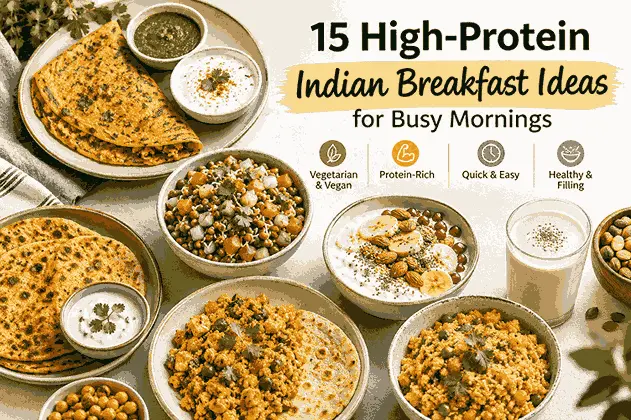
A busy morning should not mean compromising on nutrition. Whether you are heading to work, managing household responsibilities, or preparing for a productive day, a protein-rich breakfast can help you enjoy a satisfying start without spending hours in the kitchen.
Indian cuisine offers plenty of vegetarian protein sources, including moong dal, besan, paneer, curd, chickpeas, sprouts, tofu and soy chunks. With simple ingredients and a little preparation, you can turn these everyday foods into delicious breakfasts that suit your schedule.
In this guide, we explore 15 high-protein Indian breakfast ideas for busy mornings, including quick five-minute options, filling meals and make-ahead recipes. All suggestions are vegetarian or vegan, with no eggs, chicken, fish or other non-vegetarian ingredients.
1. Lentil & Besan-Based Breakfasts (Vegetarian and Vegan)
Lentils and gram flour are affordable sources of plant protein that can easily become part of your daily breakfast routine.
1. Moong Dal Chilla
Moong dal chilla is a savoury Indian pancake made from soaked moong dal, ginger, cumin and green chillies. Blend the ingredients into a batter, add chopped vegetables and cook on a lightly greased pan until golden.
Preparation time: 15–20 minutes, excluding soaking.
Protein tip: Serve with plain curd or unsweetened soy yoghurt for additional protein.
2. Besan Vegetable Cheela
Mix besan with water, onions, tomatoes, coriander, ajwain and your favourite spices. Spread the batter on a hot pan and cook both sides.
Preparation time: 10–15 minutes.
Protein tip: Pair it with curd or a tofu filling. This is a practical option when you have forgotten to soak lentils overnight.
3. Mixed Dal Dosa
Combine soaked moong dal, chana dal and masoor dal. Blend with ginger and cumin, then cook the batter into thin, crisp pancakes.
Preparation time: 15–20 minutes, excluding soaking.
Protein tip: Serve with sambar or prepare the batter in advance to make breakfast easier.
2. Paneer & Dairy Favourites
Paneer, milk and curd are convenient protein sources for people who include dairy in their diets.
4. Paneer Bhurji
Crumble paneer and sauté it with onions, tomatoes, capsicum, turmeric and everyday spices. Serve with whole-wheat roti or multigrain toast.
Preparation time: 10–15 minutes.
Protein tip: Add peas or serve with plain curd. For a vegan alternative, replace paneer with firm tofu.
5. Paneer-Stuffed Whole-Wheat Paratha
Prepare a filling with crumbled paneer, coriander, cumin and chopped vegetables. Stuff it into whole-wheat dough and cook using a moderate amount of oil or ghee.
Preparation time: 15–20 minutes.
Protein tip: Prepare the filling the previous evening and serve the paratha with plain curd.
6. High-Protein Curd and Oats Bowl
Combine rolled oats, thick plain curd, chia seeds and chopped almonds. Add a little fruit for natural sweetness, then refrigerate overnight or enjoy immediately.
Preparation time: 5 minutes.
Protein tip: Choose strained or high-protein yoghurt when available. Protein content varies between products, so check the nutrition label.
3. Sprouts, Chana & Grains
Sprouts, chickpeas and whole grains add variety, fibre and other important nutrients to breakfast.
7. Moong Sprouts Chaat
Mix cooked moong sprouts with cucumber, tomato, onion, coriander, lemon juice and roasted cumin powder.
Preparation time: 5–10 minutes with ready-to-use sprouts.
Protein tip: Add roasted peanuts or tofu cubes. Cook sprouts thoroughly rather than eating them raw, as raw sprouts can carry harmful bacteria.
8. Kala Chana Breakfast Bowl
Combine boiled black chickpeas with chopped vegetables, lemon juice and coriander. Alternatively, lightly sauté the chickpeas with cumin and spices.
Preparation time: 10 minutes with pre-cooked chickpeas.
Protein tip: Serve with whole-wheat roti or add a small portion of roasted seeds.
9. Vegetable Dalia with Moong Dal
Cook broken wheat with moong dal, carrots, peas and beans. Season with ginger, cumin and turmeric for a warm, satisfying breakfast.
Preparation time: 15–20 minutes.
Protein tip: Combining dal with grains makes the dish more substantial than plain dalia. Use millet instead of broken wheat if you need a gluten-free alternative.
4. Quick 5-to-10-Minute Recipes
When time is limited, choosing ingredients that require little preparation can make healthy eating more manageable.
10. Peanut Butter Whole-Wheat Toast
Spread natural peanut butter on whole-wheat toast and top with banana slices or chia seeds.
Preparation time: 5 minutes.
Protein tip: Pair it with milk or unsweetened soy milk. Choose peanut butter with minimal added sugar and salt.
11. Roasted Chana and Nut Bowl
Combine roasted chana with a small portion of almonds, peanuts or pumpkin seeds. Add fruit and a glass of milk or soy milk for a more complete breakfast.
Preparation time: 5 minutes.
Protein tip: Prepare individual portions in advance. Nuts and seeds are nutritious but energy-dense, so adjust portions to your needs.
12. Quick Tofu Bhurji Toast
Crumble firm tofu and cook it with tomatoes, onions, turmeric and pepper. Serve on whole-wheat toast for a simple savoury meal.
Preparation time: 8–10 minutes.
Protein tip: Compare tofu nutrition labels and choose a product with a suitable protein content per serving.
5. Wholesome & Filling Breakfasts (10 to 15 Minutes)
If you need something more substantial, combine a protein source with whole grains and vegetables.
13. Savoury Oats and Moong Dal Cheela
Mix quick-cooking oats with cooked moong dal, grated vegetables, cumin and enough water to form a batter. Cook like a pancake until both sides are golden.
Preparation time: 10–15 minutes when the dal is ready.
Protein tip: Serve with curd or soy yoghurt for an additional protein source.
14. Paneer and Vegetable Whole-Wheat Wrap
Fill a whole-wheat roti with crumbled paneer, sautéed capsicum, onions and carrots. Add mint chutney and roll tightly.
Preparation time: 10–15 minutes with ready-made rotis.
Protein tip: Increase the paneer filling or use tofu for a vegan alternative.
15. Protein-Rich Vegetable Poha with Peanuts and Soy Chunks
Prepare poha with onions, peas, carrots, curry leaves and mustard seeds. Add roasted peanuts and cooked, chopped soy chunks for a more protein-rich version.
Preparation time: 12–15 minutes with prepared soy chunks.
Protein tip: Soy chunks can substantially increase the protein content of this traditionally carbohydrate-rich dish.
6. Make-Ahead & Prep-Friendly Marvels
A little planning the night before can save valuable time in the morning.
- Soak lentils: Prepare moong dal or mixed dal for the next day’s chilla or dosa.
- Cook chickpeas in batches: Refrigerate or freeze meal-sized portions for quick breakfast bowls.
- Prepare vegetables: Wash and chop vegetables in advance, storing them in clean, covered containers.
- Make batter ahead: Refrigerate suitable cheela batter in a covered container and use it promptly.
- Prepare overnight oats: Combine oats, milk or soy milk, curd and seeds, then refrigerate overnight.
Keep perishable foods refrigerated and cook ingredients thoroughly. Avoid leaving cooked legumes, tofu or dairy products at room temperature for extended periods.
7. Quick Tips to Boost Breakfast Protein Further
You do not need to change your entire diet to improve your breakfast. Small adjustments can make familiar meals more nutritious.
- Add seeds and nuts: Sprinkle chia seeds, pumpkin seeds or peanuts over breakfast bowls.
- Combine protein sources: Pair dal with grains or chickpeas with whole-wheat roti.
- Choose protein-rich dairy alternatives: Compare curd, strained yoghurt and unsweetened soy milk using nutrition labels.
- Upgrade traditional recipes: Add tofu to poha, paneer to parathas or cooked soy chunks to savoury dishes.
- Plan ahead: Keep cooked legumes and measured ingredients ready to reduce morning preparation.
For broader ideas on building healthier routines, read our related article: 10 Daily Habits That Are Ruining Your Health.
8. A Simple Five-Day High-Protein Breakfast Plan
Use this sample schedule to introduce variety into your mornings.
| Day | Breakfast | Time |
| Monday | Moong dal chilla with curd | 15–20 min |
| Tuesday | Paneer bhurji with whole-wheat roti | 10–15 min |
| Wednesday | Kala chana breakfast bowl | 10 min |
| Thursday | Peanut butter toast with milk | 5 min |
| Friday | Vegetable poha with peanuts and soy chunks | 12–15 min |
Times assume that ingredients are ready when necessary. Actual preparation time varies.
An Easy Formula for Building a Balanced Breakfast
Rather than following complicated meal plans, build your breakfast around three simple elements:
- Protein: Dal, besan, paneer, tofu, curd or chickpeas.
- Fibre and energy: Whole-wheat roti, oats, dalia, vegetables or fruit.
- Additional nutrients: Nuts, seeds and a variety of colourful vegetables.
Adjust portions to your appetite, activity level and nutritional needs. This flexible approach makes it easier to maintain variety without preparing an entirely different meal every day.
Frequently Asked Questions
1. Which Indian breakfast is highest in protein?
The answer depends on the recipe and serving size. Tofu bhurji, paneer bhurji, soy-based poha and dal-based chilla can all provide useful amounts of protein.
2. What is the best vegetarian breakfast for weight loss?
Moong dal chilla, besan cheela, tofu bhurji and curd with oats can be suitable choices. Pay attention to portions, cooking oil and your overall dietary pattern.
3. How can I get protein at breakfast without eggs?
Include lentils, besan, paneer, curd, tofu, chickpeas, roasted chana, soy chunks, nuts and seeds. These ingredients offer plenty of vegetarian and vegan options.
4. What can I eat for breakfast in five minutes?
Peanut butter toast, a roasted chana bowl and curd with oats are convenient options that require minimal preparation.
5. Is poha a good source of protein?
Traditional poha contains some protein but is mainly carbohydrate-based. Adding peanuts, peas, tofu or cooked soy chunks can increase its protein content.
6. Are sprouts a good source of protein?
Yes, moong sprouts provide plant protein and fibre. Cook them thoroughly to reduce the risk of foodborne illness.
7. Can I eat besan chilla every day?
Besan chilla can be part of a regular balanced diet. However, rotating it with other protein sources helps provide greater dietary variety.
8. Is curd with oats enough protein for breakfast?
It can provide a useful amount, depending on the ingredients and serving size. Adding nuts, seeds or roasted chana can make the meal more substantial.
9. How much protein should I eat at breakfast?
There is no single target for everyone. Protein needs depend on factors such as age, body weight, activity level and health status. Your total daily intake matters more than one fixed breakfast number.
10. Can I prepare high-protein Indian breakfasts the night before?
Yes. You can soak lentils, cook chickpeas, prepare suitable cheela batter, chop vegetables and assemble overnight oats ahead of time. Store perishable ingredients safely in the refrigerator.
Final Thoughts
Eating a protein-rich breakfast does not have to be expensive or time-consuming. Everyday Indian ingredients such as moong dal, besan, paneer, curd, chickpeas and tofu can help you prepare satisfying meals that fit your lifestyle.
Start with two or three recipes from this list, prepare ingredients in advance and experiment with different combinations. Consistency and variety are more useful than chasing the latest food trend.
The best breakfast is one that suits your routine, meets your nutritional needs and is easy to enjoy regularly.
- ICMR–National Institute of Nutrition: Dietary Guidelines for Indians — Indian dietary guidance and healthy eating recommendations.
- Harvard T.H. Chan School of Public Health: Protein — Protein sources and essential amino acids.
- Harvard T.H. Chan School of Public Health: Legumes and Pulses — The nutritional value of lentils, chickpeas and other pulses.
- Harvard T.H. Chan School of Public Health: Whole Grains — Benefits of including whole grains in a balanced diet.
- Harvard Health Publishing: Easy Ways to Add Tofu to Your Diet — Practical ways to include tofu in everyday meals.
Disclaimer: This article provides general nutrition information and is not a substitute for personalised medical or dietary advice. Protein content varies with ingredients, serving sizes and preparation methods.






Leave a Reply